Fish Tales: from sustainable ambition to financial control
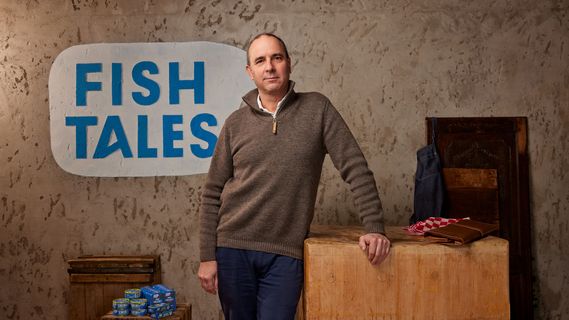
How do you scale a sustainable food brand internationally, when growth requires pre-financing, markets behave differently than expected, and losses keep mounting? Fish Tales co-founder Harm Jan van Dijk knows how complex growth can be and why control and transparency are more important than speed. ‘The faster we grew, the more money we lost. We had to take control.’
In short
- Fish Tales, a Dutch company, supplies sustainably caught fish from a traceable origin
- Their ‘fish with a good story’ drives rapid growth and expansion abroad
- The leap to the United States initially resulted in significant losses
- Transparency, also towards its financing partner, created stability and room for growth
Global mission, locally caught
Fish Tales started not only as a commercial project but also out of conviction. Chef Bart van Olphen, Van Dijk’s business partner, discovered in the early 2000s how non-transparent the fish supply chain was.
‘Whenever he asked his suppliers where their fish came from, they always answered: “From the sea”. That was often all they knew,’ says Harm Jan van Dijk. This bothered him for a long time, but after travelling around the world and visiting sustainable fisheries, Van Olphen decided he wanted to improve the fishing industry by launching a brand centred on sustainable, responsibly sourced fish.
Since 2014, their mission has been to make sustainable fishing standard practice, with full transparency and respect for ecosystems. ‘We can tell you exactly where our fish comes from and how it was caught,’ Van Dijk explains. ‘We consider fishing methods, fish stocks and working conditions of people across the fishing industry, including fair wages and the impact on local communities.’
From proven concept to international ambition
The concept resonated quickly. With its compelling narrative, Fish Tales promptly won over Albert Heijn, the first major supermarket chain, which offers a broad range of products, from canned to frozen to fresh fish. Initially exclusive to Albert Heijn, their products soon appeared in other outlets, such as Bagels & Beans and KLM.
As more supermarkets and businesses followed, the idea of expanding internationally became even more appealing. The United States, in particular, seemed like a place where they could make a real impact.
After a scouting trip by Van Olphen in 2019, they took the plunge.‘True to our nature, we approached it in a very personal and creative way,’ Van Dijk laughs. 'We created a video for buyers at major retail chains and made a daring statement that we could stop by as we would be in the area next week. When Whole Foods Market responded within just half an hour with an invitation, we had to rush to book flights and prepare a presentation.’
The downside of rapid growth
The initial setup was successful. By 2020, Fish Tales had approximately fifteen employees and generated €12 million in annual revenue, nearly €1 million of which came from the United States. But after the initial euphoria came the reality check.
Van Dijk explains: ‘Our approach was far too European. In Europe, we work with relatively short supply chains, but in the United States, there are many more intermediaries. This made everything more expensive: distribution, shelf management, returns, promotions.’
These increased costs directly impacted the bottom line, and the results were far from what they had anticipated: ‘The faster we grew, the larger the losses.’ Furthermore, additional working capital was required. ‘To get listed at Walmart, we needed to hold around €1 million in inventory.’
Simultaneous scale-up and start-up
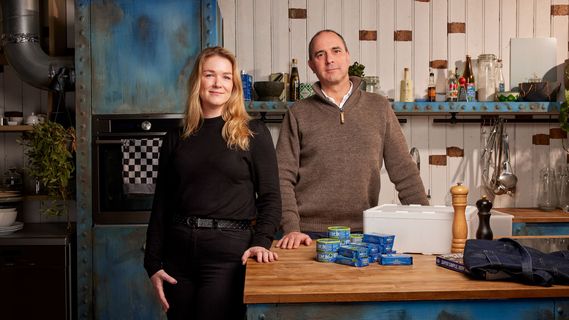
At that stage, Fish Tales had to restructure its financing. They were unable to reach a solution with their former bank. ‘We just couldn’t make any headway there.’
ABN AMRO stepped in with a tailored financing framework for sustainable food companies. ‘The account manager worked closely with us and ensured that our application was approved. Initially, we secured €1.5 million in overdraft financing, supplemented by additional working capital.’
“Transparency about the figures gave the bank clarity and gave us peace of mind. It gave us time to recalibrate”

Harm Jan van Dijk
Co-founder Fish Tales
Van Dijk recognises this was a bold move, also for the bank. ‘In effect, they were financing two businesses at the same time: a stable, steadily growing scale-up in Europe and a highly volatile, fast-changing start-up in the United States.’
That is precisely why Fish Tales made a conscious decision to be fully transparent. ‘We laid everything on the table, including setbacks. That created clarity and room for constructive dialogue.’ That stability proved decisive, says Van Dijk. ‘Because the bank actively thought through solutions with us, we were able to stay focused on running the business.’
First control, then growth
In 2023, Fish Tales drew a clear conclusion: in the United States, it needed to regain control of margins, inventory, and operations before pursuing further growth.
That strategy paid off: in 2024, losses in the United States still exceeded €1 million, but the tide had turned. In 2025, losses had been virtually eliminated, while global revenue increased to approximately €25 million. ‘We are back in control now and able to focus on growth again.’
The partnership with ABN AMRO has also intensified. Van Dijk: ‘They have expanded our credit financing, which I see as a strong vote of confidence. Meanwhile, the US organisation is on a much firmer footing, supported by a local team that continues to expand.’
Ready to accelerate your international growth?
Unlock new opportunities across borders with the right insights, financing solutions, and expert support. We help you navigate risks, seize market potential, and expand with confidence.
Tips for entrepreneurs
What is Van Dijk’s key takeaway from their American ‘false start’? ‘Never cut corners when it comes to having a team on the ground. Early on, we wasted money because we didn’t fully understand the market.’
When it comes to financing, his advice is clear: ‘Make sure your bank is a partner, not a counterparty. We were fully transparent and that transparency created calm.’ His conclusion is as simple as it is powerful: ‘Speed matters, but control always comes first.’